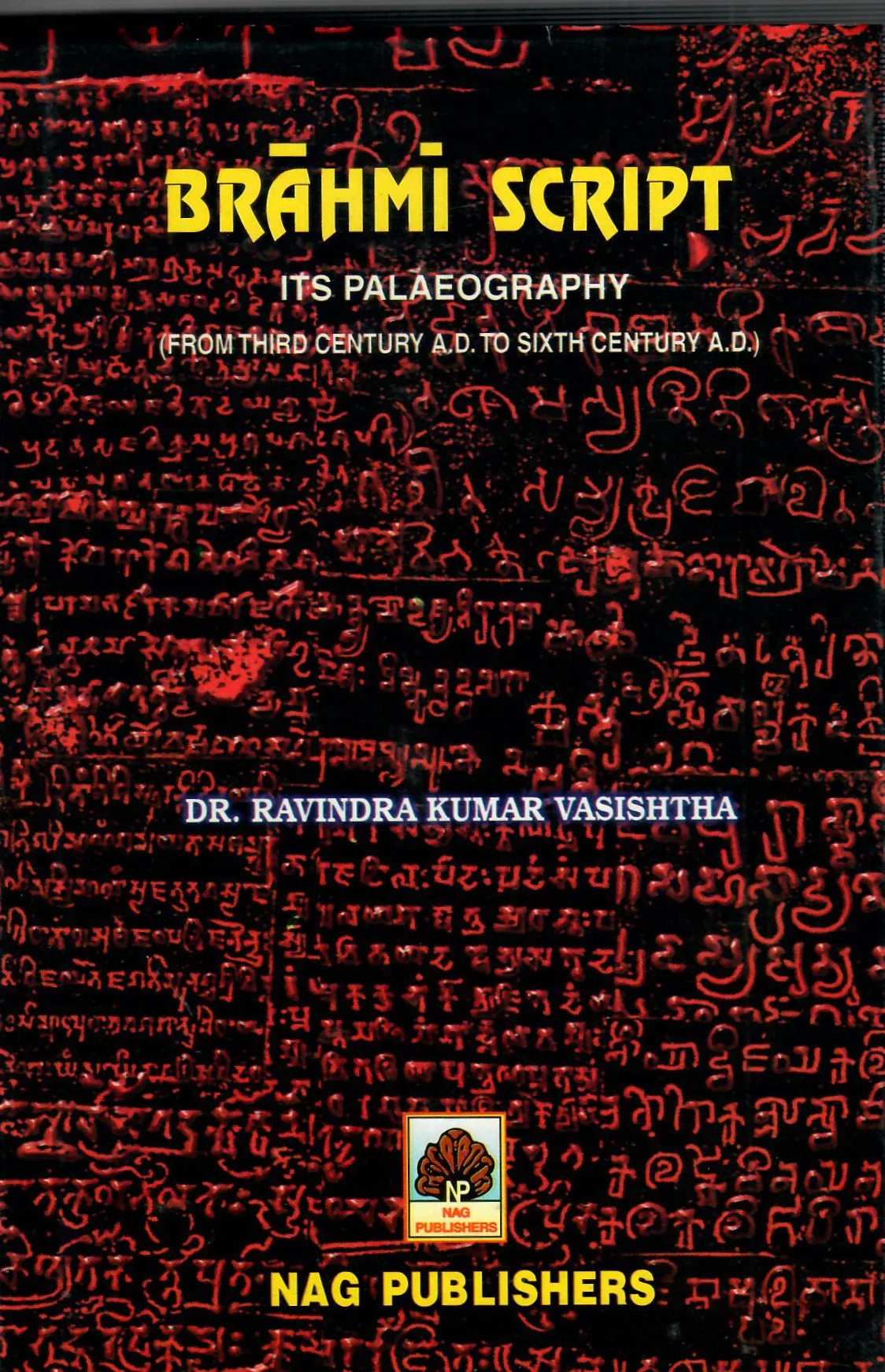
Brahmi Script : Its Palaeography by Dr. Ravindra Kumar Vasishtha
Brahmi Script Its Palaeography by Dr. Ravindra Kumar Vasishtha is a comprehensive scholarly study of the evolution and development of the ancient Brahmi script during a crucial period in Indian history.
Key Features of this academic work:
- Detailed palaeographic analysis of Brahmi script evolution
- Comprehensive study covering 3rd to 6th century A.D.
- Historical development of Indian writing systems
- Scholarly examination of inscriptions and manuscripts
- Essential reference for epigraphy and ancient Indian studies
- Academic research methodology and analysis
This book provides an in-depth exploration of how the Brahmi script evolved during the post-Mauryan period, offering valuable insights into the development of Indian writing systems. Dr. Ravindra meticulous research makes this work an invaluable resource for epigraphists, historians, linguists, and students of ancient Indian civilization and paleography.
About the Book
Present work 'Brahmi script - Its Palaeography' revolves around the process which caused the changes in the Brahmi script during four centuries; from the third century A.D. to the sixth century A.D. It is during this period, the script underwent extensive changes paving way to clear division into the northern and the southern varieties within it. This evolution has been studied on the basis of the script found in the pre-Gupta and the gupta period, alongwith the Kutila type of the script and that used in the lower Deccan and south India. Numerals found used during this period has been comprehensively delt with along with the probable auspicious symbols found from the Indus valley seals upto the inscriptions of the sixth century A.D.
About the Author
Dr. Ravindra Kumar Vasishtha (b. 1952 at Amritsar, Punjab) got school education fro Delhi. He received graduate and post-graduate degrees from the University of Delhi, Delhi. He holds doctorate on the study of the Brahmi script. Presently he is teaching Sanskrit in the Shivaji College (University of Delhi), New Delhi.
Credit of publication of the manuscript of the Kuber Purana goes to him. A series of articles on the 'Brahmi se Nagari tak' (in Hindi) was published in a quarterly journal 'the Nagari Sangam' by the Nagari-lipi Parishad, New Delhi. Seven research articles have been presented by him in several seminars and conferences. A radio talk on the 'Asokan Brahmi script' is also delieved by him.
At present he is working on a detailed work on the evolution of the Nagari script. More over a extensive multi-dimensional computerized project-showing how exactly modern scripts originated from the Brahmi script is in press.
| PREFACE | iii | |
| ABBREVIATIONS | ix | |
| TRANSILITERATION SYSTEM | x | |
| Chapter I | Introduction - (a) A brief | 128 |
| Survey of Indian Eplgraphical and Palaeographical studies | ||
| (b) Study of the development of the Brahmi script upto 600 A.D. | ||
| Chapter II | Pre Gupta-Period | 29-47 |
| Chapter III | Early Gupta Period | 48-74 |
| Chapter IV | The Gupta Period | 75-138 |
| (a) The Central Indian style | ||
| (i) The Kausambi style | ||
| (ii) The Malwa style | ||
| (iii) The Vakataka style | ||
| (b) Mathura and the North-west region | ||
| (c) The Western Style | ||
| (d) The Easter Style | ||
| Chapter V | Transition To 'Kutila' | 139-185 |
| (a) The Kausambi Style | ||
| (b) Early 'Kutila' Variety | ||
| (c) Other Current Styles | ||
| (i) The Kathiawad Style | ||
| (ii) The Vakataka Style | ||
| (iii) The Eastern Style | ||
| Chapter VI | The Lower Deccan | 186-243 |
| And South India | ||
| (a) The Iksvakus | ||
| (b) The Brihatphalayanas | ||
| (c) The Anandas | ||
| (d) The Salankayana and Visnukundins | ||
| (e) The Kadamba | ||
| (f) The Gangas of Mysore | ||
| (g) The Eastern Gangas | ||
| (h) The Pallavs | ||
| Chapter VII | Sings, Symbols And Numerals | 244-253 |
| (a) Auspicious sings and symbols | ||
| (b) Numerals |
Brahmi Script Its Palaeography by Dr. Ravindra Kumar Vasishtha is a comprehensive scholarly study of the evolution and development of the ancient Brahmi script during a crucial period in Indian history.
Key Features of this academic work:
- Detailed palaeographic analysis of Brahmi script evolution
- Comprehensive study covering 3rd to 6th century A.D.
- Historical development of Indian writing systems
- Scholarly examination of inscriptions and manuscripts
- Essential reference for epigraphy and ancient Indian studies
- Academic research methodology and analysis
This book provides an in-depth exploration of how the Brahmi script evolved during the post-Mauryan period, offering valuable insights into the development of Indian writing systems. Dr. Ravindra meticulous research makes this work an invaluable resource for epigraphists, historians, linguists, and students of ancient Indian civilization and paleography.
About the Book
Present work 'Brahmi script - Its Palaeography' revolves around the process which caused the changes in the Brahmi script during four centuries; from the third century A.D. to the sixth century A.D. It is during this period, the script underwent extensive changes paving way to clear division into the northern and the southern varieties within it. This evolution has been studied on the basis of the script found in the pre-Gupta and the gupta period, alongwith the Kutila type of the script and that used in the lower Deccan and south India. Numerals found used during this period has been comprehensively delt with along with the probable auspicious symbols found from the Indus valley seals upto the inscriptions of the sixth century A.D.
About the Author
Dr. Ravindra Kumar Vasishtha (b. 1952 at Amritsar, Punjab) got school education fro Delhi. He received graduate and post-graduate degrees from the University of Delhi, Delhi. He holds doctorate on the study of the Brahmi script. Presently he is teaching Sanskrit in the Shivaji College (University of Delhi), New Delhi.
Credit of publication of the manuscript of the Kuber Purana goes to him. A series of articles on the 'Brahmi se Nagari tak' (in Hindi) was published in a quarterly journal 'the Nagari Sangam' by the Nagari-lipi Parishad, New Delhi. Seven research articles have been presented by him in several seminars and conferences. A radio talk on the 'Asokan Brahmi script' is also delieved by him.
At present he is working on a detailed work on the evolution of the Nagari script. More over a extensive multi-dimensional computerized project-showing how exactly modern scripts originated from the Brahmi script is in press.
| PREFACE | iii | |
| ABBREVIATIONS | ix | |
| TRANSILITERATION SYSTEM | x | |
| Chapter I | Introduction - (a) A brief | 128 |
| Survey of Indian Eplgraphical and Palaeographical studies | ||
| (b) Study of the development of the Brahmi script upto 600 A.D. | ||
| Chapter II | Pre Gupta-Period | 29-47 |
| Chapter III | Early Gupta Period | 48-74 |
| Chapter IV | The Gupta Period | 75-138 |
| (a) The Central Indian style | ||
| (i) The Kausambi style | ||
| (ii) The Malwa style | ||
| (iii) The Vakataka style | ||
| (b) Mathura and the North-west region | ||
| (c) The Western Style | ||
| (d) The Easter Style | ||
| Chapter V | Transition To 'Kutila' | 139-185 |
| (a) The Kausambi Style | ||
| (b) Early 'Kutila' Variety | ||
| (c) Other Current Styles | ||
| (i) The Kathiawad Style | ||
| (ii) The Vakataka Style | ||
| (iii) The Eastern Style | ||
| Chapter VI | The Lower Deccan | 186-243 |
| And South India | ||
| (a) The Iksvakus | ||
| (b) The Brihatphalayanas | ||
| (c) The Anandas | ||
| (d) The Salankayana and Visnukundins | ||
| (e) The Kadamba | ||
| (f) The Gangas of Mysore | ||
| (g) The Eastern Gangas | ||
| (h) The Pallavs | ||
| Chapter VII | Sings, Symbols And Numerals | 244-253 |
| (a) Auspicious sings and symbols | ||
| (b) Numerals |
Original: $5.32
-70%$5.32
$1.60Description
Brahmi Script Its Palaeography by Dr. Ravindra Kumar Vasishtha is a comprehensive scholarly study of the evolution and development of the ancient Brahmi script during a crucial period in Indian history.
Key Features of this academic work:
- Detailed palaeographic analysis of Brahmi script evolution
- Comprehensive study covering 3rd to 6th century A.D.
- Historical development of Indian writing systems
- Scholarly examination of inscriptions and manuscripts
- Essential reference for epigraphy and ancient Indian studies
- Academic research methodology and analysis
This book provides an in-depth exploration of how the Brahmi script evolved during the post-Mauryan period, offering valuable insights into the development of Indian writing systems. Dr. Ravindra meticulous research makes this work an invaluable resource for epigraphists, historians, linguists, and students of ancient Indian civilization and paleography.
About the Book
Present work 'Brahmi script - Its Palaeography' revolves around the process which caused the changes in the Brahmi script during four centuries; from the third century A.D. to the sixth century A.D. It is during this period, the script underwent extensive changes paving way to clear division into the northern and the southern varieties within it. This evolution has been studied on the basis of the script found in the pre-Gupta and the gupta period, alongwith the Kutila type of the script and that used in the lower Deccan and south India. Numerals found used during this period has been comprehensively delt with along with the probable auspicious symbols found from the Indus valley seals upto the inscriptions of the sixth century A.D.
About the Author
Dr. Ravindra Kumar Vasishtha (b. 1952 at Amritsar, Punjab) got school education fro Delhi. He received graduate and post-graduate degrees from the University of Delhi, Delhi. He holds doctorate on the study of the Brahmi script. Presently he is teaching Sanskrit in the Shivaji College (University of Delhi), New Delhi.
Credit of publication of the manuscript of the Kuber Purana goes to him. A series of articles on the 'Brahmi se Nagari tak' (in Hindi) was published in a quarterly journal 'the Nagari Sangam' by the Nagari-lipi Parishad, New Delhi. Seven research articles have been presented by him in several seminars and conferences. A radio talk on the 'Asokan Brahmi script' is also delieved by him.
At present he is working on a detailed work on the evolution of the Nagari script. More over a extensive multi-dimensional computerized project-showing how exactly modern scripts originated from the Brahmi script is in press.
| PREFACE | iii | |
| ABBREVIATIONS | ix | |
| TRANSILITERATION SYSTEM | x | |
| Chapter I | Introduction - (a) A brief | 128 |
| Survey of Indian Eplgraphical and Palaeographical studies | ||
| (b) Study of the development of the Brahmi script upto 600 A.D. | ||
| Chapter II | Pre Gupta-Period | 29-47 |
| Chapter III | Early Gupta Period | 48-74 |
| Chapter IV | The Gupta Period | 75-138 |
| (a) The Central Indian style | ||
| (i) The Kausambi style | ||
| (ii) The Malwa style | ||
| (iii) The Vakataka style | ||
| (b) Mathura and the North-west region | ||
| (c) The Western Style | ||
| (d) The Easter Style | ||
| Chapter V | Transition To 'Kutila' | 139-185 |
| (a) The Kausambi Style | ||
| (b) Early 'Kutila' Variety | ||
| (c) Other Current Styles | ||
| (i) The Kathiawad Style | ||
| (ii) The Vakataka Style | ||
| (iii) The Eastern Style | ||
| Chapter VI | The Lower Deccan | 186-243 |
| And South India | ||
| (a) The Iksvakus | ||
| (b) The Brihatphalayanas | ||
| (c) The Anandas | ||
| (d) The Salankayana and Visnukundins | ||
| (e) The Kadamba | ||
| (f) The Gangas of Mysore | ||
| (g) The Eastern Gangas | ||
| (h) The Pallavs | ||
| Chapter VII | Sings, Symbols And Numerals | 244-253 |
| (a) Auspicious sings and symbols | ||
| (b) Numerals |